
Operational Solutions
Asset Tracking System
Manage the identity, location and movements of corporate assets.
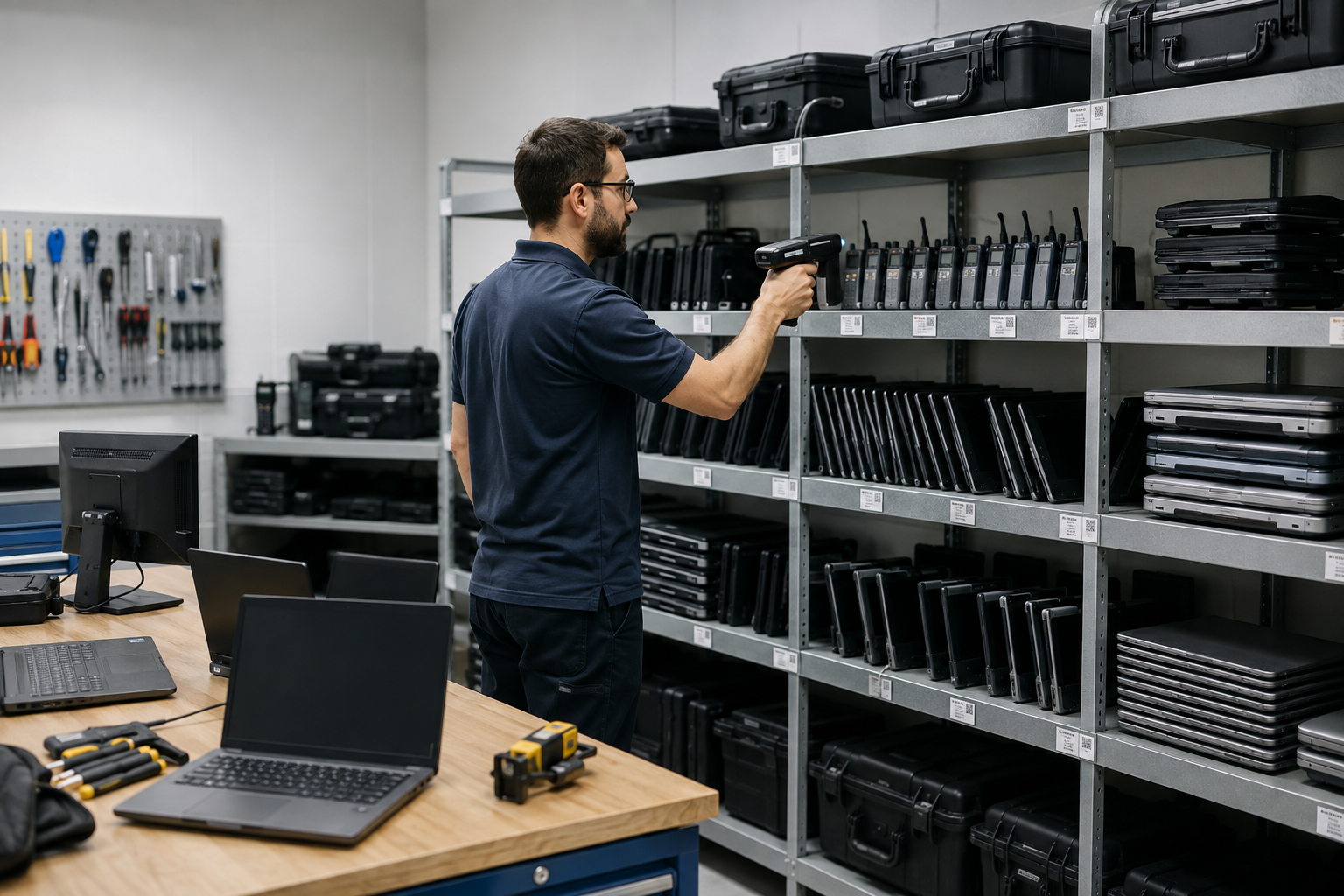
Identify fixed assets and corporate equipment with unique IDs; link assignment, location, transfer, inventory and service processes to operational records. Using barcode, QR and RFID infrastructure as the project requires, manage asset movements together with the relevant corporate systems.
Lifecycle
How Is the Asset Lifecycle Managed?
From the first identification of an asset through assignment, location, movement, inventory and service records, the lifecycle can be tracked according to the project scope.
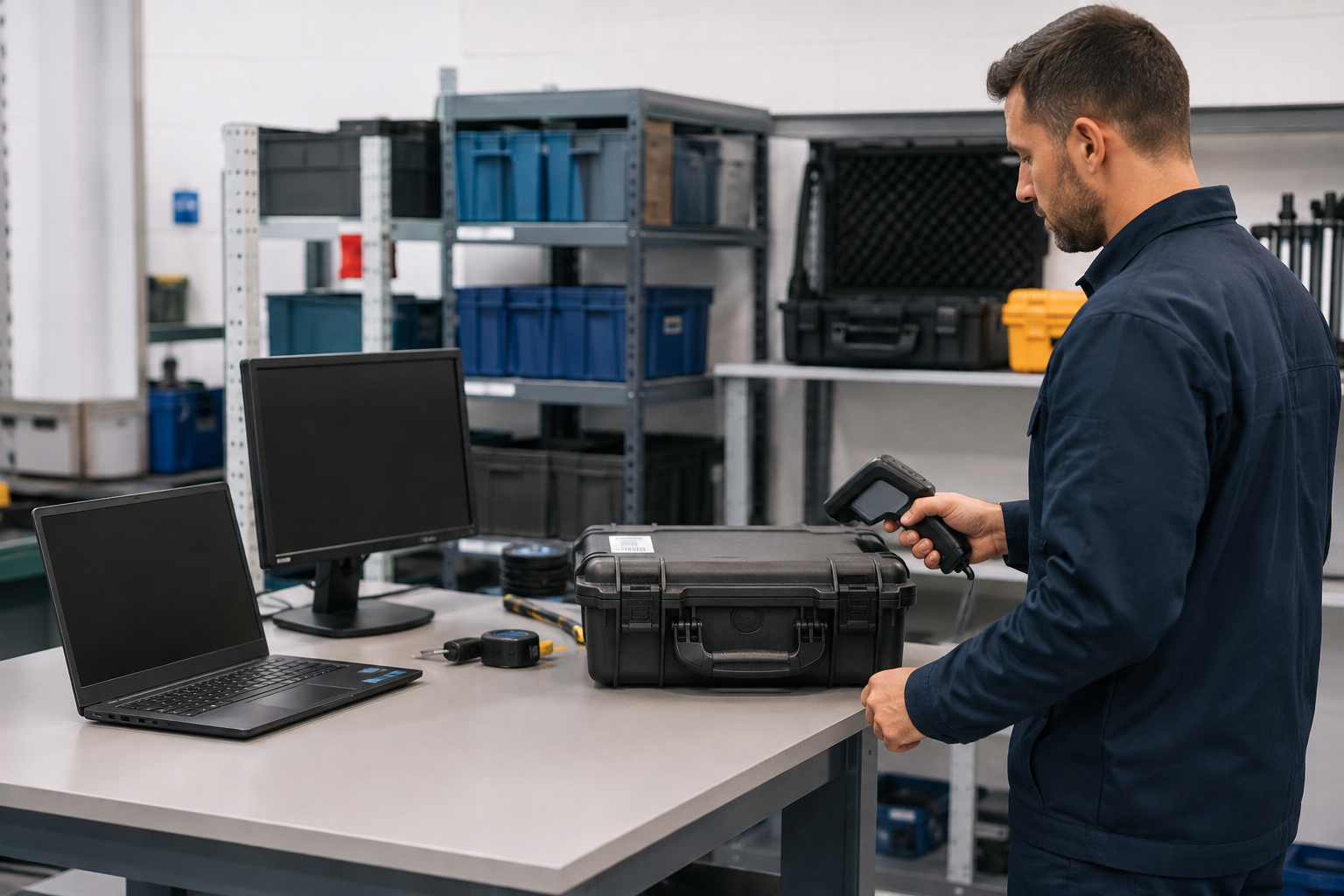
- 01IdentificationAn asset or piece of equipment is linked to a unique asset record.
- 02Assignment / responsibilityAn asset can be linked to a person, department or operational unit according to the project scope.
- 03LocationThe facility, section, room or defined site point where the asset is located can be kept in the operational record.
- 04MovementTransfers, handovers, returns or location changes can be recorded.
- 05Inventory / checkPeriodic or operation-based inventory checks can be carried out.
- 06Maintenance / retiredMaintenance, service, fault, scrapping, transfer or out-of-use statuses can be linked to the lifecycle.
Asset management
Core Tracking Areas
- Asset identificationIdentifying an asset with a unique ID and a core asset record.
- Assignment and responsibilityLinking an asset to the responsibility of a person, department, team or location.
- Location trackingKeeping the record of the asset at a facility, section, room or defined site point.
- Transfer and movement recordsTracking handovers, returns, transfers and location changes.
- Inventory and stock checkVerifying assets in defined periods or at operational points.
- Maintenance / service / lifecycle statusLinking service, inspection, repair and usage status changes.
Traceability
From asset identity to operational record
The identified asset can be linked, together with field operations, responsibility and location data, to the movement record in the appropriate corporate system.
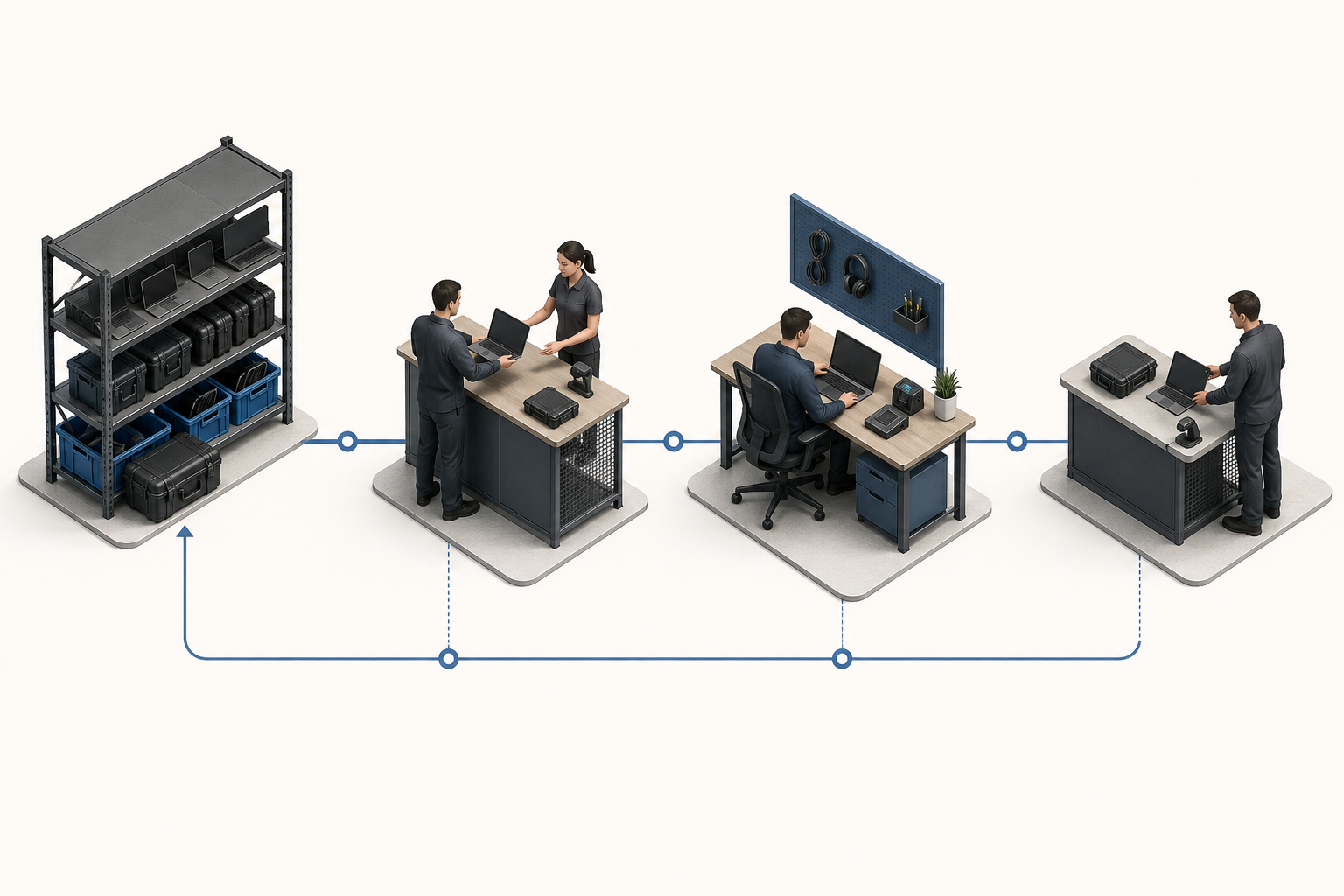
Depending on the project scope, the asset ID can be linked to a person, department, team, location and service history. Not every project needs all layers or devices; the structure is determined by the environment in which the asset is used.
Barcode + QR + RFID
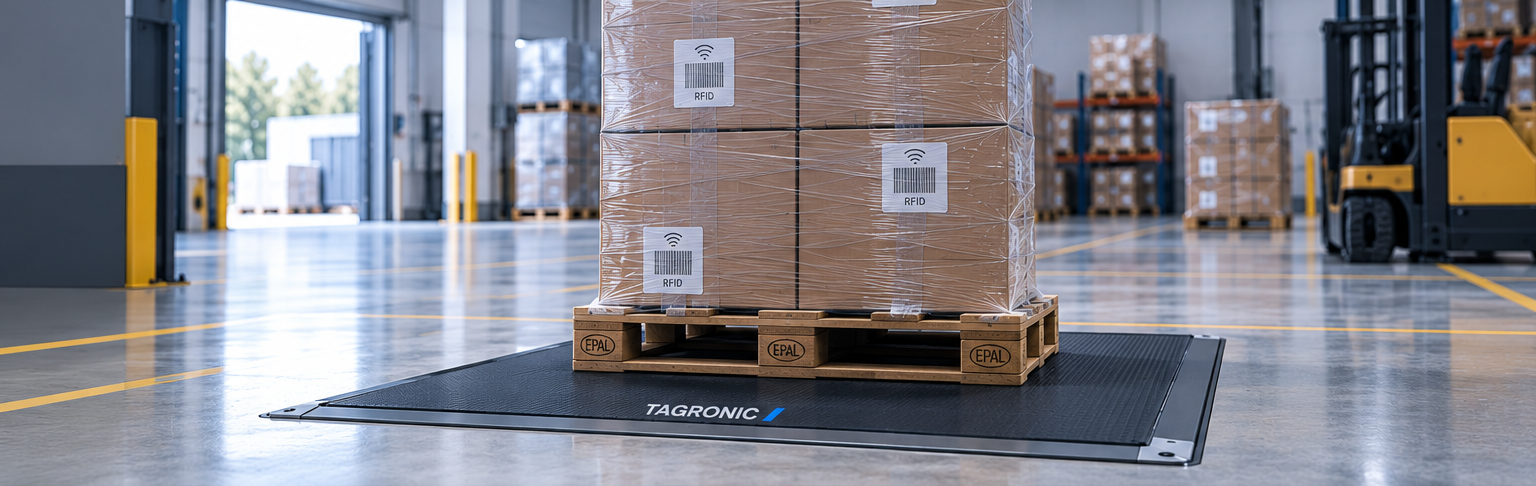
Barcode and QR can be suitable for manual verification, low-volume operations and standard asset labelling. RFID can be considered for projects involving fast inventory, reduced line-of-sight dependency or controlled movement points. For metal assets, tag selection and mounting method are reviewed separately. If real-time location is required, this scope should be assessed separately with RTLS.
Areas of application
Where Is It Used?
- IT equipmentAsset records and assignment flow for computers, monitors, printers and handheld terminals.
- Production and technical equipmentLocation and service movements of production equipment, fixtures and technical assets.
- Hand tools and shared equipmentHandover, return and inventory records for shared tools and devices.
- Laboratory / test devicesResponsibility and maintenance relationship of test, measurement and laboratory assets.
- Office and corporate fixed assetsTracking office equipment by person, department, room and location.

Technical information
Frequently Asked Questions About the Asset Tracking System
Share your line conditions and product structure, and our engineers will assess the right solution with you.
Contact Us ↗What is the difference between an Asset Tracking System and a stock tracking system?
Stock tracking focuses on quantity and logistics location, while asset tracking follows the identity, responsibility, location, movement and lifecycle status of a specific asset. The two structures can work together depending on the project scope.
Can barcode, QR and RFID be used together?
These methods can be evaluated together across different assets or operational points. The suitable identification method is determined by reviewing the structure of the asset, its environment of use, the process and inventory requirements.
Can assets be assigned to staff or departments?
Depending on the project scope, an asset can be linked to a person, department, team, location or operational responsibility. The goal is to keep asset movement and responsibility records in the operational context.
Can metal equipment be tracked with RFID?
It can be evaluated; however, the choice of a suitable metal-mount tag, placement, reader/antenna configuration and environmental conditions must be handled together. The result is verified with tests on real assets.
Can it be integrated with our existing ERP or maintenance system?
A suitable integration method can be determined by reviewing the data structure and process scope of the existing systems. The asset, movement, service and status fields to be transferred are planned according to project requirements.
FOR YOUR ASSET OPERATIONS
Let's work through the lifecycle of your corporate assets together.
Together we review your asset structure, identification infrastructure, assignment and location flow together with your existing corporate systems to build the right tracking architecture.